The Foundation: HSM-Based Backup Key Vault
Meta has been steadily reinforcing the security of end-to-end encrypted backups for WhatsApp and Messenger. At the heart of this effort lies the HSM-based Backup Key Vault, a system that enables users to protect their message history with a recovery code. This code is stored in tamper-resistant hardware security modules (HSMs), ensuring that neither Meta, cloud storage providers, nor any third party can access the recovery code or the encrypted data. The vault operates as a geographically distributed fleet across multiple data centers, using majority-consensus replication to guarantee resilience and availability.
Over-the-Air Fleet Key Distribution for Messenger
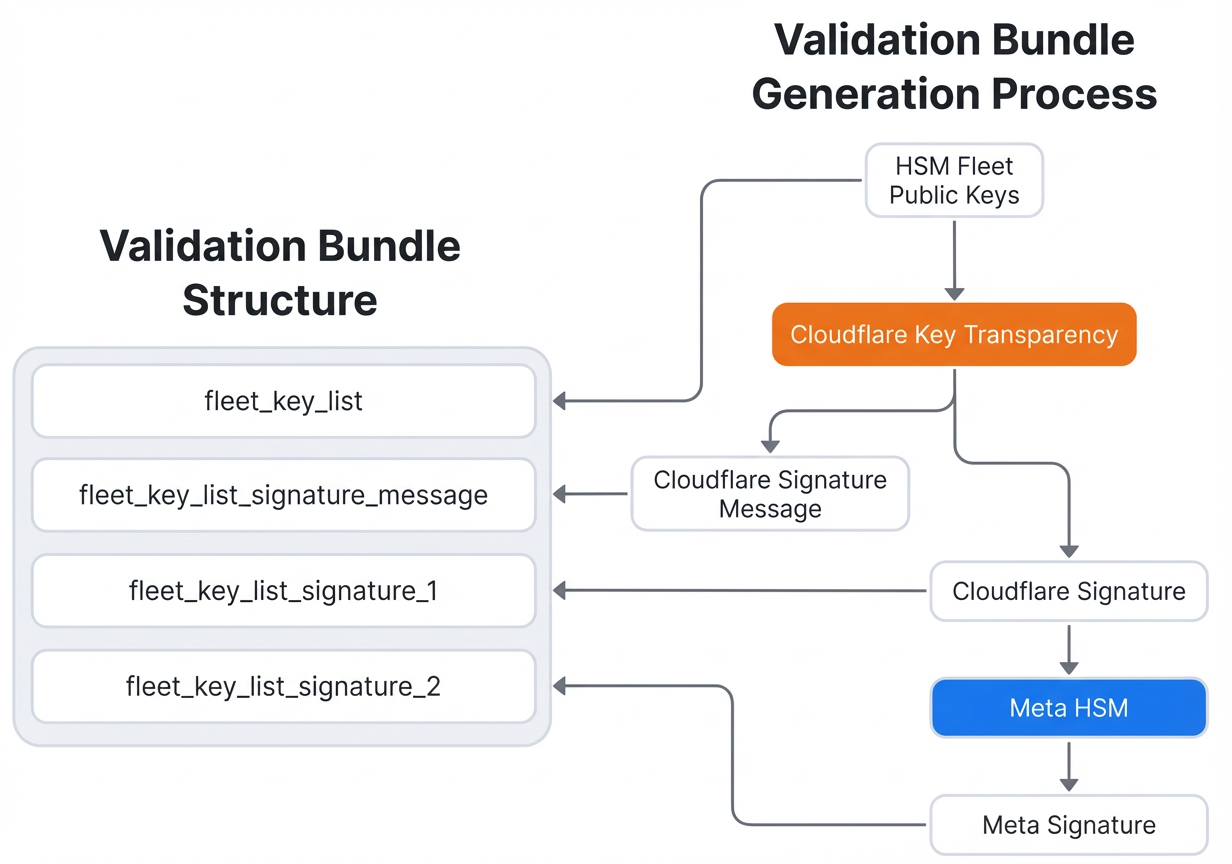
To strengthen the authentication of HSM fleets, clients must verify the fleet’s public keys before establishing a session. In WhatsApp, these keys are hardcoded into the application, which simplifies verification but requires app updates when fleets change. For Messenger, Meta has introduced a more flexible approach: over-the-air fleet key distribution. This mechanism allows new HSM fleets to be deployed without requiring a Messenger app update. Fleet public keys are delivered in a validation bundle that is cryptographically signed by Cloudflare and countersigned by Meta. This dual-signature process provides independent proof of authenticity, and Cloudflare maintains an audit log of every validation bundle. The full protocol is detailed in Meta’s whitepaper, "Security of End-To-End Encrypted Backups."
Transparency in Fleet Deployment
Meta emphasizes that transparency is crucial to proving the system works as intended and that the company cannot access users’ encrypted backups. Starting now, Meta will publish evidence of the secure deployment of each new HSM fleet on its blog. New fleets are deployed infrequently—typically every few years—and each deployment will be accompanied by a detailed proof that users can independently verify. The verification process follows the audit steps outlined in the whitepaper. This commitment strengthens Meta’s position as a leader in secure encrypted backups and builds user trust.
How Users Can Verify the Security
Users interested in verifying that a new fleet is deployed securely can follow the audit procedure described in the whitepaper. The evidence published on the blog includes cryptographic proofs and links to Cloudflare’s audit logs. For those seeking a deep technical understanding, the full whitepaper "Security of End-To-End Encrypted Backups" provides a comprehensive specification of the HSM-based Backup Key Vault, including validation protocols and security guarantees.
These updates—over-the-air key distribution for Messenger and transparent fleet deployment—are the latest steps in Meta’s ongoing effort to make end-to-end encrypted backups more secure and user-friendly. Earlier, Meta also introduced passkeys to simplify the encryption of backups. Together, these measures ensure that users’ message histories remain private and protected, even from Meta itself.