A powerful solar storm that struck Earth around 1200 CE has been uncovered by Japanese researchers using ancient tree rings and centuries-old sky observations. The event, marked by eerie red auroras and a spike in carbon-14 trapped in buried wood, indicates the Sun was far more active than previously thought.
Dr. Aiko Watanabe, lead researcher from Nagoya University, said: "This is a remarkable discovery that shows the Sun can unleash extreme radiation events even during periods we considered quiet."
Background
The team linked historical reports of red auroras with carbon-14 spikes in tree rings from around 1200 CE. These carbon-14 spikes are produced when cosmic rays from a solar storm interact with the atmosphere, and trees absorb the carbon as they grow.
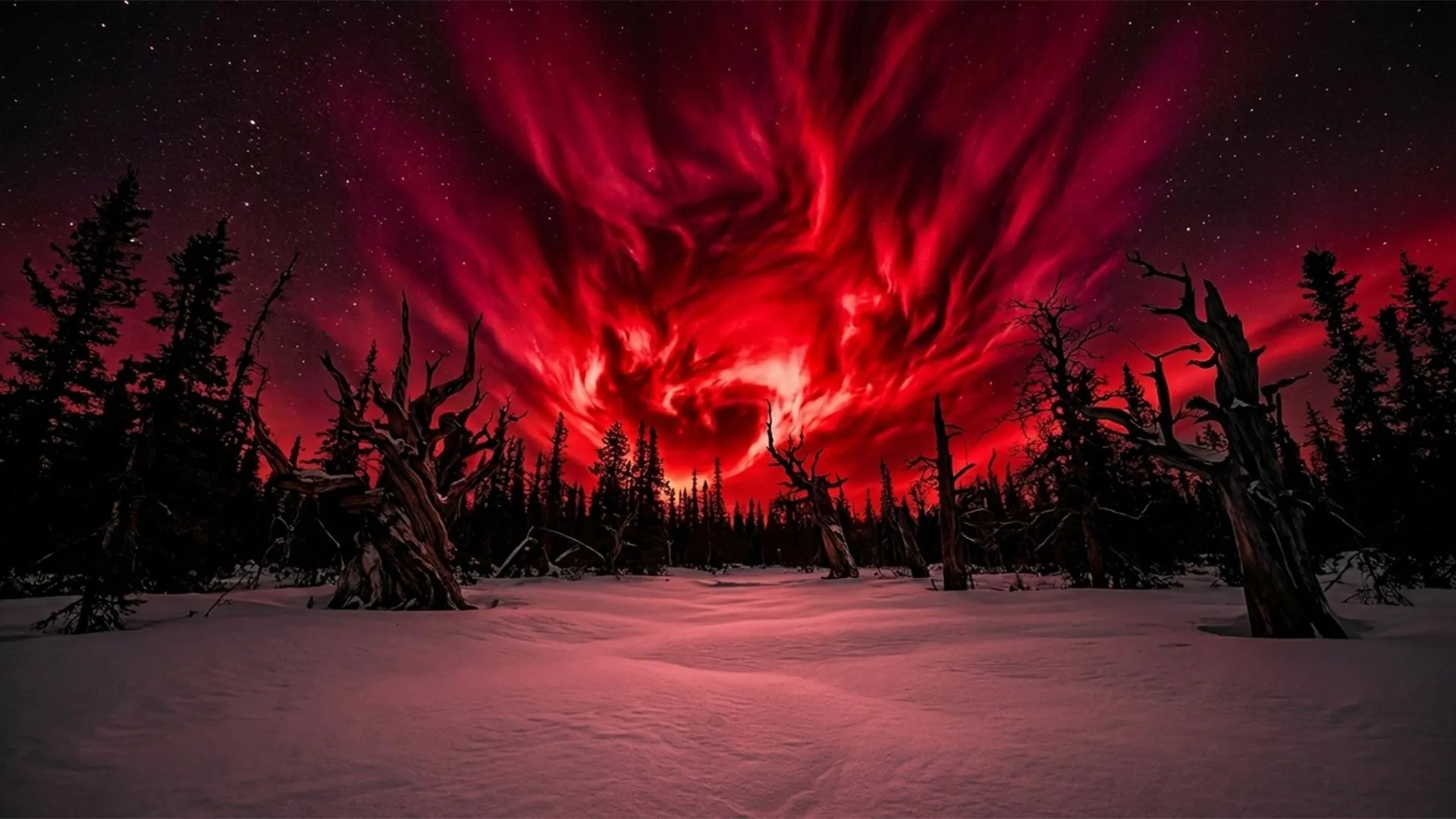
Medieval records from Europe, Asia, and the Middle East describe eerie red skies that lasted for days. The researchers cross-referenced these accounts with tree-ring data from ancient Japanese cedar trees, confirming a major solar radiation event.
The findings also suggest that the Sun’s 11-year solar cycle was unusually short during that period, with cycles lasting as little as 8 years. This indicates a period of heightened solar activity, contrary to the common assumption of a quiet Sun in the Middle Ages.
What This Means
This discovery challenges our understanding of long-term solar behavior. If the Sun can produce such extreme storms during a seemingly quiet epoch, modern predictions for space weather risks may need revision.
For today’s technology-dependent world, a similar storm could cripple power grids, GPS, and satellites. Dr. Watanabe added: "We must prepare for events far stronger than anything recorded in modern history."
The research also provides a new tool for identifying past solar storms by combining tree rings and historical auroral observations. This could help build a more complete timeline of extreme space weather events over millennia.
Further analysis of tree rings from other regions and time periods will be crucial. Scientists hope to uncover more events to better understand the Sun’s variability and the risks it poses to Earth.